
8 Hectare Regional Industrial Estate
Large scale industrial development is not for only for institutional capital
7/25/20263 min read
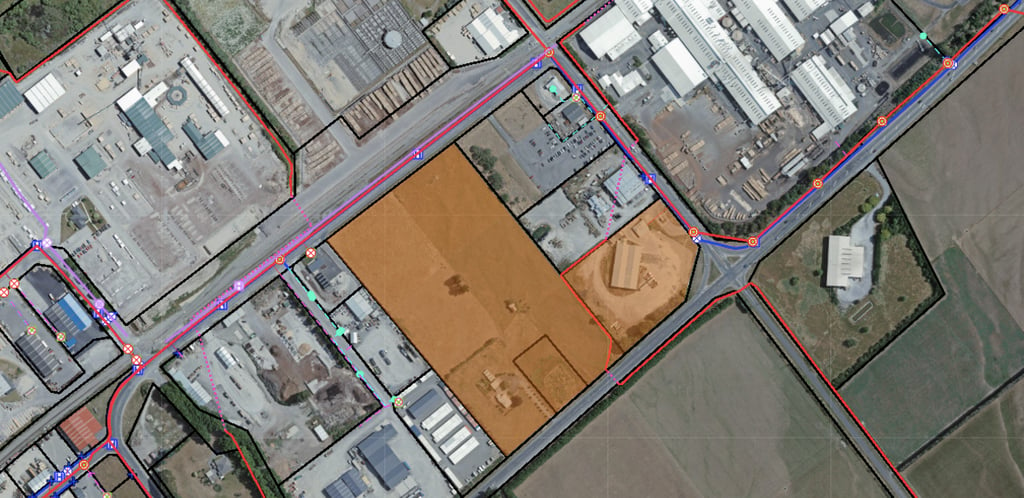
SH2 Wairarapa site. 8.4Ha industrial zoned landbank in 3x titles with house & buildings
Site Characteristics
8.4 hectares with 360+ metres of State Highway 2 road frontage
3x titles
Services run directly adjacent boundary
Traffic access options from two, possibly three sides
Flat, level contour. No flooding or other hazards
Neighbours other large scale intensive industrial sites
Existing house (small holding income)
Large scale industrial development is not as out of reach as you may think, you’re just not thinking creatively enough
Auckland, Melbourne, Brisbane $500+ per m2. $2M will buy m2 not hectares
This site priced around ~$50/m2. Strategic regional lower North Island, industrial land at scale. To get into the deal, assuming say 50% LVR we need around ~$2M cash
What you don't do:
Try and develop the entire site in one hit. Too capital intensive. Market likely cannot absord the land sales required fast enough. Civils and development costs ~$5M+ ballpark on top of your land costs. No one will finance your pipedream. Interest costs and slow sales will stop you in your tracks
Landbanks Approach:
Turn this into a yield asset, to create development optionality down the track.
1. Metal the site. Compacted gravelled site to be rented as suitable yardspace for rent. Flexible yard sizes for transport, contractors and storage. Indicative cost to import fill and shape to drain will be mid $1M for the full site. The nearby businesses are all land heavy with large hardstand areas, no need to reinvent the wheel and create something else yet. Main risk is ground conditions, poorer ground conditions will require more imported fill. On a site like this, basic Geotech test would be part of due diligence. Most will forget that step as well as checking demand for yards.
2. Assuming 50% debt on land and total development costs, the maximum equity we would need at this point is around $3M
3. Basic gravelled yards ~$10-20/m2/year lease income. Estimated gross income ~$400k/annum (discounted for bulk leasing and vacancy). Yield now sits around 6.6%. Interest costs around around $200k per year. Land is cash flow positive
4. Wait. Probably several years until you have sufficient cash to develop or land value appreciates further
5. Staged industrial development. Cherry pick the cheapest part of the site to develop. This is near existing services where infrastructure costs are minimised. 100m of roading and services opens up 20,000-25,000m2 vacant land for sale. Indicative civil/development costs: $2-3M. Target product would be smaller vacant lot, serviced sites around 2000-5000m2. Through development, you increase your initially purchased ~$50/m2 bulk land to indicative selling rates of $200-300/m2
6. Wait. Sell down lots required to reduce debt and recycle capital. Establish market absorption.
7. LVR position is likely now favourable. You have equity in the deal and cashflow from yard leases. Either extract more value through further staged development and sell down, or just maintain healthy cashflow and sit on land value appreciation.
8. Complete second stage development if desired to unlock say another 20,000-25,000m2 for sell down. We are now “harvesting” the value in the land as required and the market allows
9. After some time, perhaps 10-15 years have passed. LVR’s are probably healthy enough to complete the final stage which may be more capital intensive. Subdivision of remaining land with construction of warehousing.
10. Sell down buildings as required for any remaining debt or simply retain buildings to rent.
Alternative Passive Approach:
Complete Step 1 only and landbank. Lower risk and as with any good positively geared property, you use time and debt erosion to eventually acquire another.
The Verdict:
If you have good serviceability, initial cash/equity required to get into development of this scale would be ~$3M. Beyond that, time and land value appreciation largely does the heavy lifting, allowing more intensive development to take place in progressed stages. Development of industrial estates is not just for institutional money, but you do need to pick good sites and have the right strategy to match the capital.