

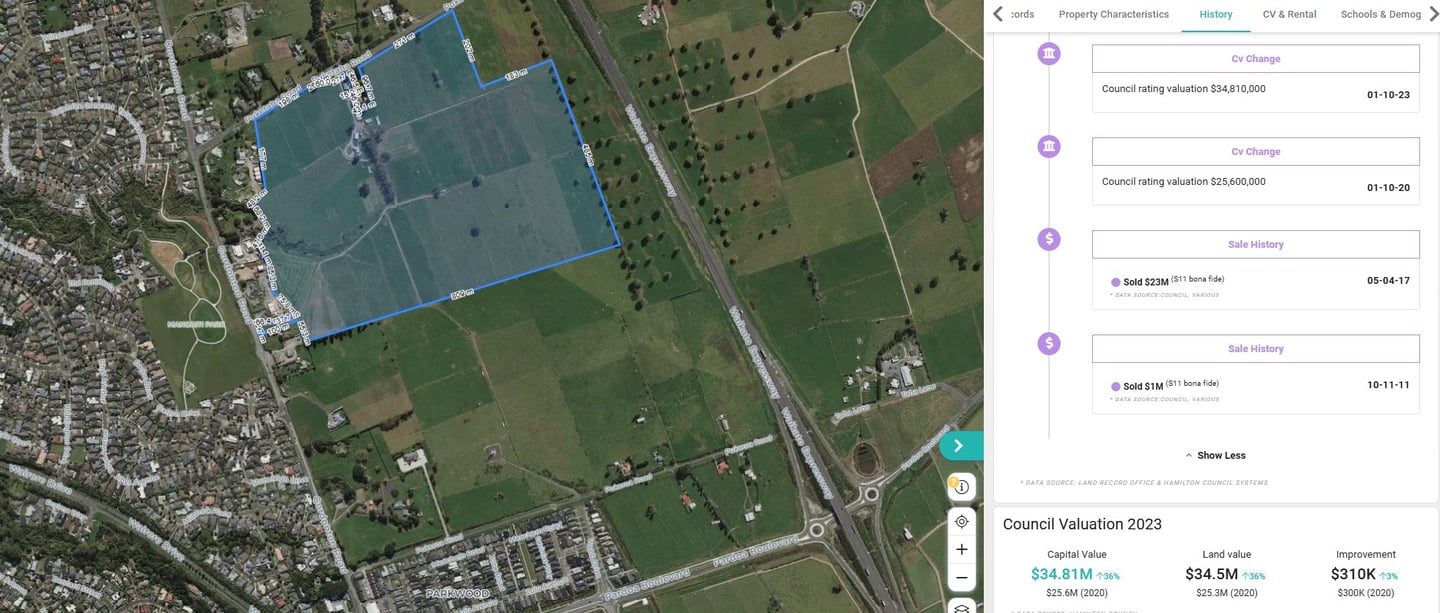
Investment Gain $22.0M (5.4 years), 2200% Return on Investment, 78% Annualised ROI
The Path of Least Resistance
Among the many strategies in property investment, land-banking is often overlooked, yet when executed correctly, it can deliver impressive returns.
With a solid understanding of the right locations and parcels of land, it’s possible to generate rapid equity and wealth without any physical improvements or effort. Additionally, the sale of these properties may result in tax-free capital gains.
This strategy is commonly used by long-term investors, developers, and institutions aiming to position themselves ahead of infrastructure delivery and urban growth.
When compared to the typical Property Developer, who is content with a 20% return after significant effort, risk, and future tax liabilities, careful land-banking presents a far more appealing alternative.
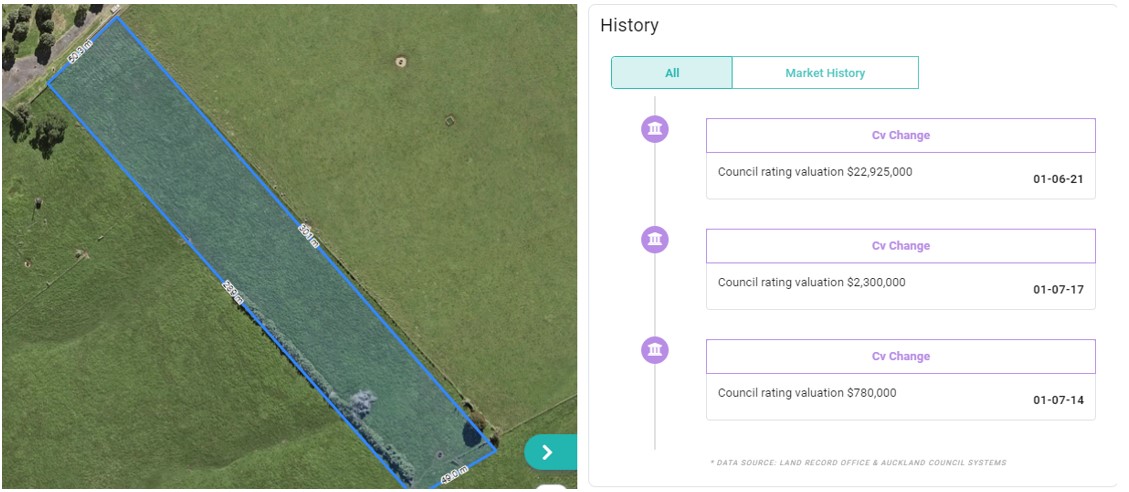

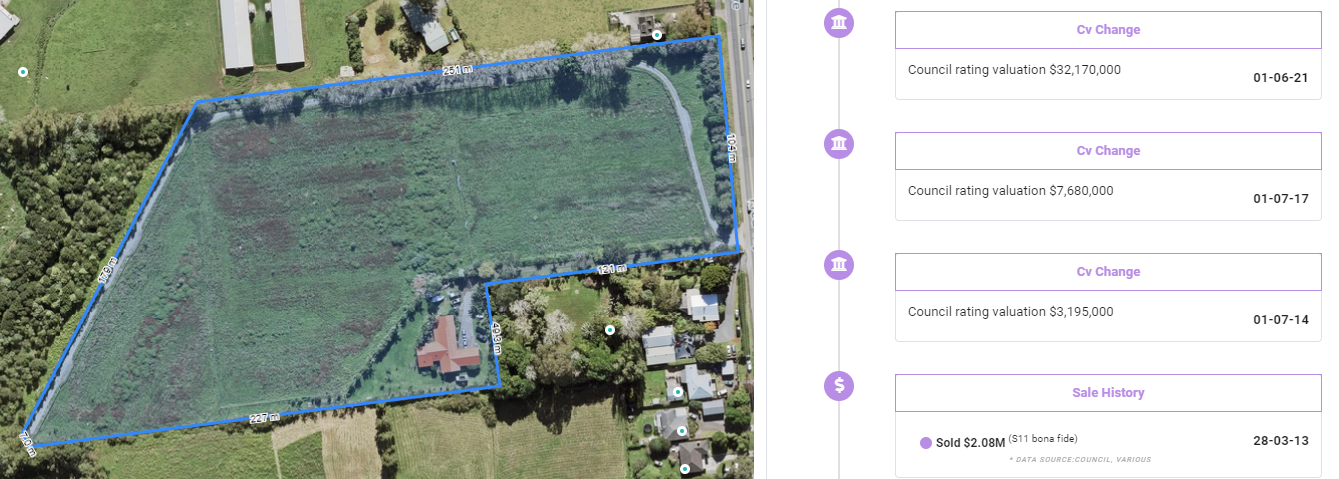
Paper Gain $22.1M (6.9 years), 2839% Return on Investment, 63% Annualised ROI
What is Land Banking?
Land banking refers to the strategy of acquiring large parcels of undeveloped land in areas with potential for growth, with the aim of holding onto the land for future development or sale. As cities expand and populations increase, demand for land rises, leading to appreciation in land value over time. By investing in land now, Buyers can secure valuable properties in prime locations that are expected to become more desirable in the future.
This investment approach has been used for over a century, but its popularity has grown in recent years. The idea behind land banking is straightforward; buy land in areas with strong growth potential and wait for the market to increase demand and drive-up land prices. This strategy enables Investors to capitalize on the limited supply of land in rapidly developing areas.
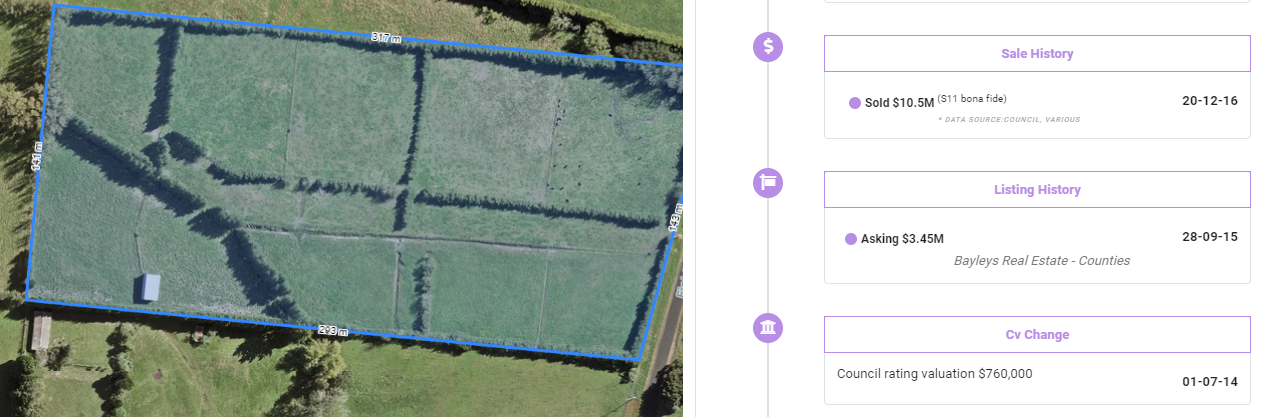
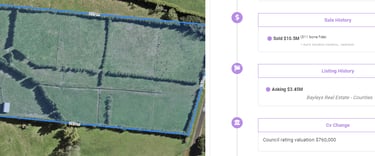
Approximate Gain $9.6M (2.5 years), 1275% Return on Investment, 188% Annualised ROI
Factors to Consider
When selecting locations for land banking, there are several factors that Investors need to consider.
Location is key, investing in areas with high growth potential is crucial for maximising returns. Look for regions with strong economic indicators, such as population growth, job opportunities, infrastructure and development. Proximity to urban centres, schools, and transportation hubs can also play a significant role in determining the land’s future value.
It is important to assess the environment and zoning regulations within the area. Understanding the local laws and restrictions can help Investors avoid potential issues and ensure that their investment aligns with future development plans. Conducting thorough due diligence and consulting with our expertise can provide valuable insights into the land’s potential and any limitations or risks that may arise.
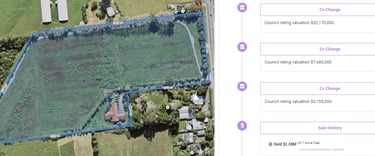
Paper Gain $30.0M (8.2 years), 1446% Return on Investment, 39% Annualised ROI
Strategies for Success
To succeed in land banking over the long term, investors must go beyond passive holding and apply a set of informed, proactive strategies.
Target High-Growth Corridors
Focus on areas with strong fundamentals and long-term growth potential. This means identifying regions with:
Rising population trends
Expanding employment hubs
Favourable council zoning and structure plans
Understanding demographic shifts, economic indicators, and strategic planning documents will help pinpoint areas poised for major appreciation.
Understand Development Sequencing
Not all land within a growth area is created equal. Prioritise sites with favourable:
Topography and geotechnical conditions
Access to trunk infrastructure (water, wastewater, roads)
Proximity to schools, centres, and transit
These are the sites developers will target first and the ones likely to be rezoned or serviced sooner.
Buy Early in the Planning Cycle
The most significant gains are made by acquiring land before it's rezoned or identified as future urban. Once the narrative is public, pricing quickly reflects the upside.
Align With Infrastructure Timing
Track major government infrastructure investments. Land near planned roading and utilities upgrades will re-rate as delivery approaches.
Leverage Industry Intelligence
Stay ahead of the market by understanding what developers and national businesses are doing:
Who’s acquiring land, and where?
Which precincts are seeing activity?
What price points are triggering deals?
Being plugged into industry momentum gives you a tactical edge.
Maintain Flexible Exit Options
Land banking isn't one-size-fits-all. Have multiple exit strategies:
Await city boundary changes/amalgamation
Forced live zoning through Private Plan Changes/PSA
Consented development through the DA/Resource Consent process
Partner through a joint venture eg. contribute land to a devlopment project
Deliver your own staged development
Exit flexibility reduces risk and increases your ability to capitalise on changing market conditions.
Control Capital Exposure
Structure deals to limit downside:
Use staged purchases or put/call options
Explore syndication or co-investment
Avoid overcommitting upfront in long-dated zones
These tactics protect cash flow while preserving upside.
Model With Discipline
Every acquisition should be underpinned by detailed feasibility analysis:
Set target IRRs based on risk profile and timeline
Conduct scenario modelling to test delays or planning outcomes
Use discounted cash flow (DCF) models to guide pricing
Rigorous modelling is what separates speculators from successful landbankers
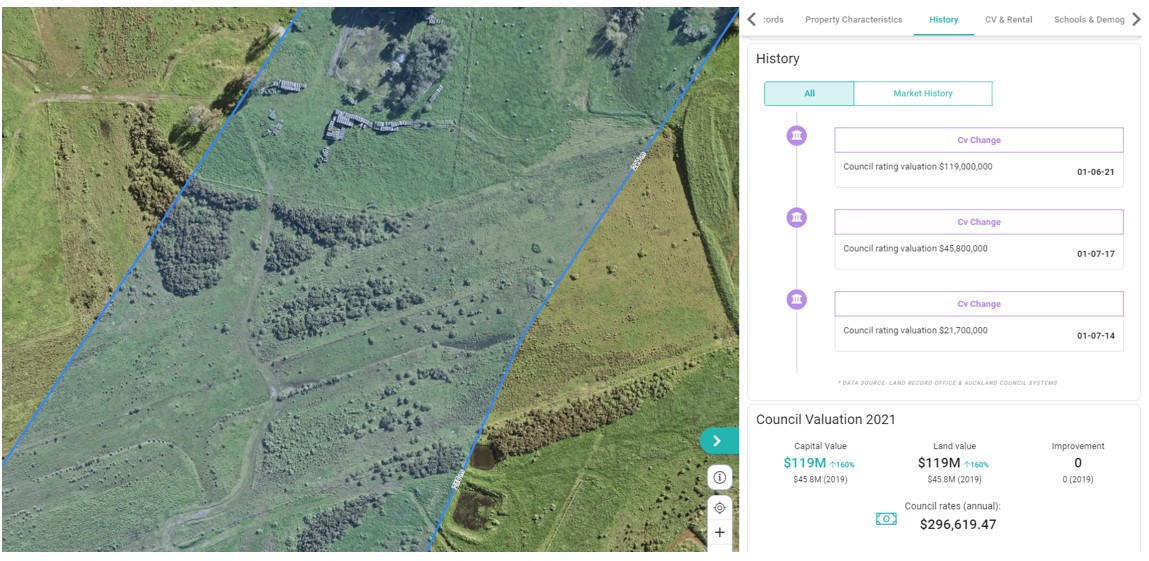
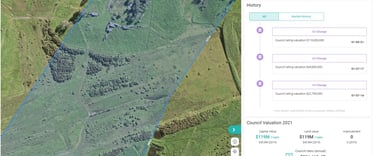
Paper Gain $97.3M (6.9 years), 448% Return on Investment, 27% Annualised ROI
The Reality
Changes in timing, planning outcomes, feasibility, risk perception or required IRR can massively swing the land’s current value. From highly profitable to completely unviable...
What Drives Landbank Value?
Zoning Timeline - Delays in rezoning or plan changes reduce the present value significantly
Infrastructure Delivery - Roads, water, wastewater, and transport access drive developability and can add significant value
IRR Hurdle - The longer you wait, the higher return you need which pushes down the price you're willing to pay. Also a measure of the risk profile.
Market Conditions - A rising market can boost future land values dramatically; a soft one can flatten them. Leverage amplifies the gains and losses.
Exit Strategy - Holding land with no clear endgame is dangerous. The best landbanking is done with a defined exit (e.g., PPC/PSA + sale)
How Sensitive Is land banking?
Let’s say your land is projected to be worth $20 million in 15 years. The price you’d be willing to pay today depends heavily on your target return:
At a 20% IRR, you could justify paying around $1.5 million today.
At a 25% IRR, that figure drops to approximately $770,000.
This illustrates how even a few percentage points in return expectations or a delay in value realisation can wipe out a significant amount of residual value. The longer the investment horizon, the more sensitive land value becomes to these variables.
Accurately assessing a site's development potential and costs to develop is critical. It shapes your risk profile and the IRR hurdle rate you apply. Unlike established residential or commercial assets-where valuations are often grounded in direct market comparables, landbanking relies on complex, assumption-driven models and probabilistic scenario assessment (monte carlo simulations).
Misjudging planning feasibility, infrastructure constraints, or development costs can result in major valuation errors and introduce significant risk into your investment.
What About the Huge Wins?
These high-IRR outcomes often happen when:
They understand the engineering fundamentals of existing infrastructure networks.
Zoning or plan change happened much faster than expected
Infrastructure announcements (e.g., IFF, new expressways) re-rated the land
The investor had superior planning knowledge
They sold at the right time before needing to spend capex
These are the exceptions, not the rule. But they are possible. They require detailed understanding of the development capability of land.
Why Landbanking is not a strategy for most
Done well, landbanking isn’t just speculation. It involves:
Detailed DCF and IRR modelling. Sensitivity and probabilistic analysis of scenarios
Understanding the development efficiency of land parcels
Understanding of development project risks
Zoning and infrastructure timing expertise
Scenario planning and downside mitigation
Navigating planning frameworks and council strategy
Strategic partnerships with developers or council
Is often capital intensive with long payback periods
What Smart Landbankers Do Differently
Buy ahead of the narrative ie. before imminent zoning changes take place
Map the infrastructure pipeline - know where the pipes, roads, and schools are going
Model multiple exits such as Sale to Developer, JV, or self performed delivery from greenfields to housing
Control risk and cashflow - using options, syndicates, or structured capital
Is Landbanking Right for You?
Landbanking can offer incredible upside, but it's not passive. It demands insight, patience, and precise financial discipline.
If you're serious about it, make sure you're:
Backed by robust modelling
Guided by zoning and infrastructure timing
Prepared for long holding periods with uncertain exit dates
If done right, landbanking can outperform most other real estate strategies.
If done poorly, it can tie up millions for decades with no clear return
The content on this website is provided for general informational and educational purposes only. It reflects the author’s personal opinions and market views based on publicly available data and general trends. It does not constitute legal, financial, investment, engineering, or property valuation advice.
The information provided does not represent a registered property valuation under New Zealand or Australian law and should not be relied upon for legal, financial, or lending purposes. All price estimates and commentary are personal market opinions, based on publicly available data, and may be subject to change. Independent advice from a Licensed Valuer or Qualified Professional should be sought before making any property, development, or investment decisions.
Readers and clients are advised to seek independent, professional advice from licensed practitioners (such as Lawyers, Financial Advisors, Valuers, or Engineers) before making any property, development, or investment decisions.
This content does not replace or constitute proper due diligence. Users are responsible for undertaking their own investigations and verifying all relevant legal, technical, financial, and planning information through appropriate channels.
While every effort has been made to ensure the accuracy of the information, errors, omissions, or outdated content may exist. The author makes no representation or warranty regarding the completeness or suitability of the material for any specific purpose.
The author and business accept no liability for any loss, cost, or consequence arising from reliance on this material.
Any examples, case studies, or references to specific properties are for illustrative purposes only and do not imply endorsement or disapproval of any particular real estate, property owner, or business.