
Amreins Rd, Taupaki
Countryside Living Subdivision
4/8/20258 min read
141 Amreins Road, Taupaki
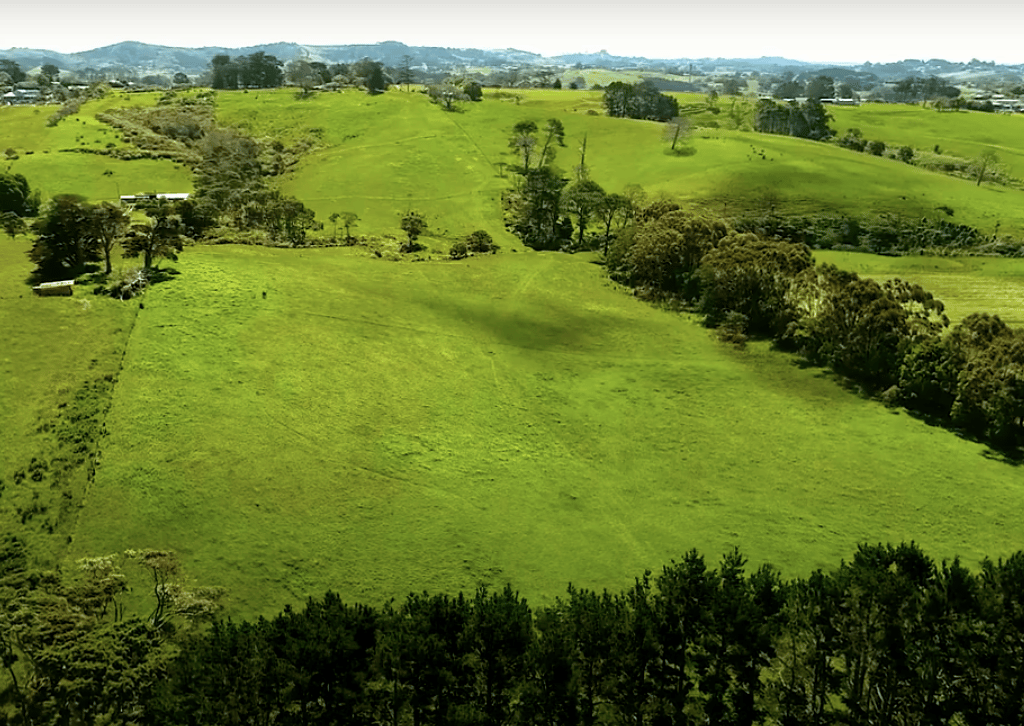
141 Amreins Road is a landbank development site West of Auckland currently on the market. It is a 14.1 Hectare rural block of land in Taupaki zoned Countryside Living under the Auckland Unitary Plan. It is up for tender after a few months on the market. It last sold in 2005 for $950k with a current CV of $3,195,000 comprising $2,970,000 land value and $225,000 buildings. There is a small 1950’s 3 bed farm house on the property. We explored this site from a development perspective to understand what the residual land value may be to develop. A preliminary scheme sketch developed by the Vendor has been the inspiration for this exercise.
The land would be described as gently rolling with some wind break and gully vegetation. The Pakinui stream cuts north-south through the property to the eastern third of the land. This stream captures the majority of the drainage flows across the site through a few different tributaries. The block is a long regular rectangular shape, with dimensions approximately 160m x 910m.
Photos online would suggest that geotechnical risk would be minimal and that house site positioning would be largely unrestricted with the exception of the vegetated gully sections near the south boundary. The general contour of the land would allow the site to maintain many great house pad locations, all with differing outlooks and orientations.
The site has ~160m of road frontage to Amreins Road. The existing main entrance has ~130m of traffic visibility to the north and ~250m of traffic visibility to the south. A proposed preliminary scheme sketch has been drafted to supplement the sales info, whereby the existing access is retained. It may be beneficial and/ or a requirement of subdivision that the access is shifted further to the south to improve road safety. The contour of the land would suggest that access to the lots would not pose a major challenge in road design. A stream crossing would likely be designed as part of any subdivision to access ~4.9 Hectares to the east of the block which has no other road access.
The supplied preliminary scheme sketch has this block subdivided into 14x rural lifestyle lots ranging in size from 8,012m2 to 13,588m2 with 9 of them being around 10,000m2. Notably this plan states that it would be “not fully compliant” with the Auckland Unitary Plan. The Countryside Living Zone allows for subdivision down to a 2ha/lot average providing all the usual rural subdivision requirements can be met. Higher density subdivision is only achievable through use of the Transferable Title Right (TTR) rules which allow for subdivision down to a 1 ha/lot average. It is possible to subdivide down to a minimum site area of 8000m2 so long as an average site of 1 Hectare is maintained. As this site has the “Subdivision Variation Control” allowing TTR’s, we believe it would be a reasonable assumption to yield 14 lots from the block through the use of TTR’s.
An alternative option to be explored to increase the site yield from the complying 7 lots to 14 lots would be through the wetland (stream) planting and protection. It is noted here that the site captures a small Significant Ecological Area Overlay of ~1,290m2. Extension of these vegetated areas across the Pakinui Stream and gully areas may yield a different result for the number of sites. A Planner would be able to advise on these options to a greater extent and optimise any proposed subdivision design.
This rural site is not serviced for city water supply or waste-water. As a countryside rural lifestyle subdivision all lots would be self-sufficient. As per neighbouring subdivisions water supply would be through roof tank collection and waste water collection through design and construction of septic tanks. This infrastructure would be paid by lot purchasers, reducing the servicing costs for the Developer. This subdivision however would incur significant costs to provide power supply to lot boundaries across the 14 Hectare site. This has been allowed for in preliminary feasibility. There appears to be no fibre availability to this site. Fixed wireless broadband or starlink would be the options in this instance. A cost that would be born by the lot purchasers.
The major cost components for this subdivision would be
Transferable Title Rights (if required)
Creation of access road and associated drainage.
Pakinui Stream crossing. The cost here is dependent on a number of factors and would require further investigation (simple culverts vs bridge, span width, hydraulic engineering and flood flow compliance, Geotech, fish passage). The stream crossing is a critical component as without it this site would lose 5 or 6 lots and likely render the project infeasible.
Power supply to boundaries
Native wetland/stream/gully planting
Fencing and landscaping
Several similar rural lifestyle subdivisions have already been successfully completed along Amreins Road. This established precedent helps reduce consenting risk, as it demonstrates Council support for comparable developments in the area. Additionally, these completed projects provide valuable market data to inform feasibility assessments and forecast potential lot sale revenues.
The site is located approximately ten minutes' drive from Westgate Mall, offering convenient access to urban amenities while retaining a rural lifestyle setting. The area is undergoing rapid transformation from traditional farmland to lifestyle subdivisions, with few large-scale development blocks currently available. There is also a limited supply of rural lifestyle lots on the market, presenting a strong opportunity to deliver new sections with minimal competition.
Based on these and other assessment criteria, we rated this site with a Development Index of 79%. We assessed this site with a Risk Score of 69% and Medium Data Confidence. The net developable area was assessed as 118,000m2. It is anticipated that a Net Site Yield of 14 lots is achievable but carries some consenting risk.
EstateMaster Analysis - Scenario 1
Some key assumptions for the Scenario 1 development of 14 lots are as follows:
Average lot sizes of 10,000m2 ranging in size from 8,012m2 to 13,588m2
No houses to be developed, lots sold as lifestyle sections
Pre-construction period of 18 months. Extra allowance has been made here due to the added complexity of Transferrable Title Rights.
Civil construction period of 4 months
Single staged to release all lots to market concurrently.
Sales period of 24 months, including pre-sales period of 6 months
Average lot sale of $1.0M inc GST
Project costs financed with cash
Transferrable Title Rights assumed price at $160k exc GST per title right.
Chip seal road construction including associated drainage works priced at $350k exc GST
Stream crossing priced at $200k exc GST (conservative)
Provisions for power supply (trenching and cable install, connection fees, design and compliance $250k exc GST
Allowance for wetland restoration works $40k exc GST
Landscaping/fencing costs $280k exc GST
Development contributions in line with current 2025 rates
Revenues escalated at an average of 5% and costs escalated at 3%, with the exception of Statutory Fees escalated at 7.5%.
Project contingency on all costs of 15%, net of all escalations
Hurdle rates with target development margin of 20% IRR accounting for project risks.
A starting point for land purchase of $4.0M exc GST ($4.6M inc GST)
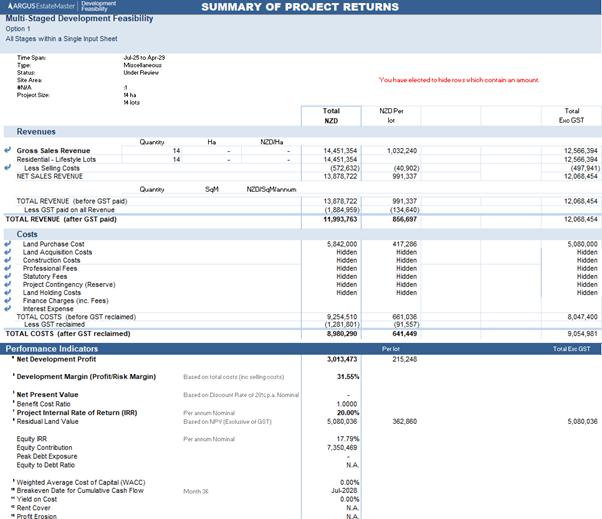
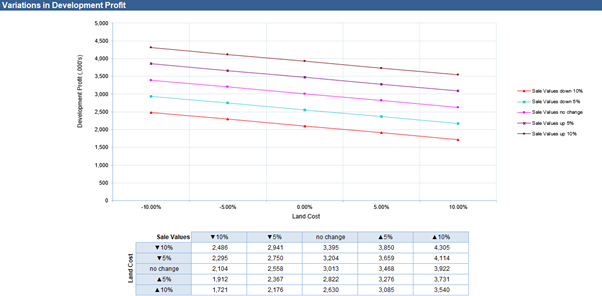
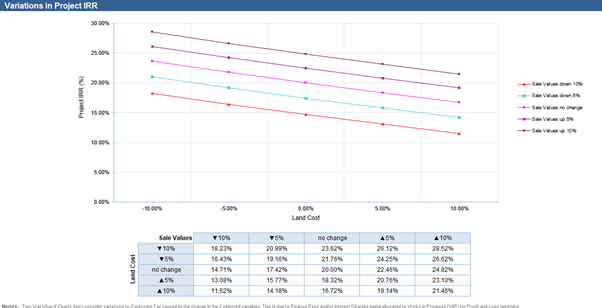
Under a land purchase price of $4.0M exc GST, the predicted Equity IRR is 26.0% with a Net Development Profit of $3.82M. The outputs for this indicated a residual land value of $5.08M exc GST based on the hurdle rates above (minimum 20% Project IRR). This represents the maximum price that can be paid for the land while still achieving the target hurdle rate of 20% Project IRR. At this margin/land purchase price, the expected Net Development Profit (before tax) is $3.01M.
Sensitivity Analysis
EstateMaster Analysis - Scenario 2
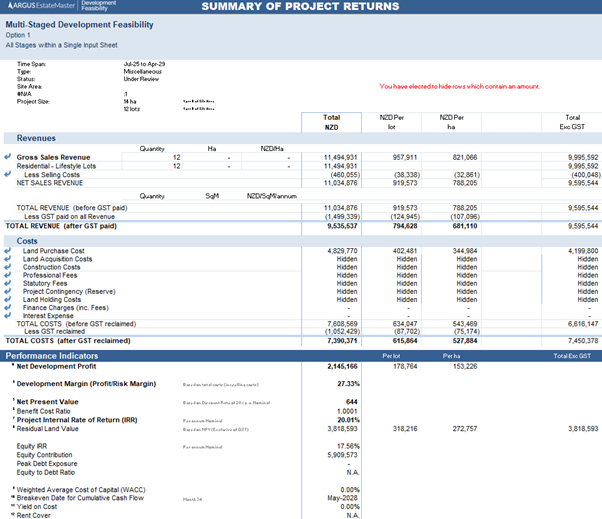
An alternate scenario was also explored through changing the following parameters:
Reductions in net site yield to 12 lots, resulting in:
5% construction cost decrease
Average lot sale price of $1.10M inc GST
4-month reduction in sales period
Under these parameters, the residual land value to maintain the hurdle rate margins was found to be $3.82M+GST achieving Net Development Profit (before tax) of $2.15M.
EstateMaster Analysis - Scenario 3
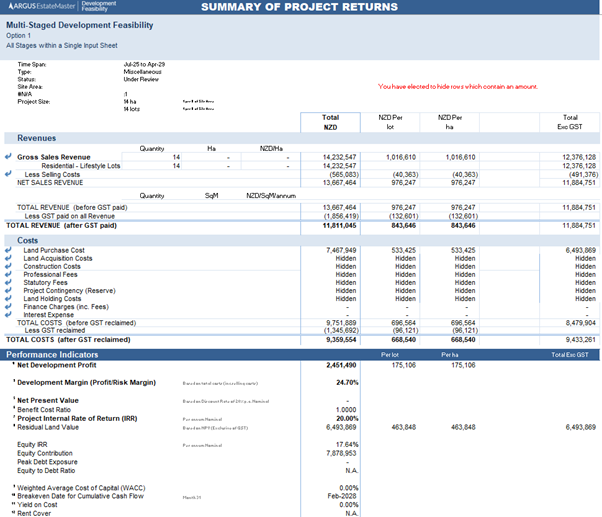
An alternate scenario was explored whereby TTR are achieved through the provision of native wetland planting initiatives. This would significantly reduce the cost per lot through reduction in TTR purchase costs. Under this scenario, the following amendments were made to the input parameters:
14% reduction in total costs resulting from TTR savings
6-month reduction in pre-construction period
Under these parameters, the residual land value to maintain the hurdle rate margins was found to be $6.49M+GST achieving Net Development Profit (before tax) of $2.45M
Summary
The Agent feedback for this property is ~$5M inc GST, noting that it is currently up for Tender. Under Scenario 1 & 3, the target hurdle rates of 20% Project IRR would be met at a land purchase price of $5M inc GST.
The purchase price is sensitive to the number of lots which this site is subdivided into. If consented to the full 14 lots, this site would likely be feasible at the indicated $5M inc GST whether that is through purchase of TTR’s or creation of TTR’s through other mechanisms such as native wetland planting. A small reduction to 12 lots would likely push this into marginal territory unless a better land deal can be struck with the owners. We have not explored the option of a complying 7 lots (2 Hectare minimum lot sizes) as the residual land value would be significantly less than the indicated $5M inc GST. In addition, TTR’s are typically an effective means throughout West and North Auckland to increase site yields and we consider it likely that this site would be consented for 12-14 lots.
To manage the consenting risk and ensure feasibility, we recommend exploring an option-to-purchase structure whereby the final acquisition price is conditional on the net site yield achieved through resource consent. Given the sensitivity of the project's economics to the number of lots, this approach would help align purchase cost with development potential. While the site appears feasible at 14 lots (and possibly marginal at 12), securing Council support for the use of TTRs or alternative yield-enhancement mechanisms, such as native wetland planting will be critical. Engaging with Council through a pre-application meeting to test the viability of a 12–14 lot subdivision would provide early clarity and help de-risk the planning process before committing to purchase. A tiered land valuation model based on consented yield could also support negotiations and strengthen the commercial case.
Why we like this development site?
We see this site as a compelling opportunity for a boutique subdivision that occupies a unique niche in the market. Its scale and configuration place it outside the typical scope of interest for large-scale developers, who tend to focus on the consistent supply of urban projects. At the same time, the land is not well-suited to productive agricultural use, making it unattractive to traditional rural buyers or farmers. This strategic "in-between" positioning results in reduced buyer competition, which can translate into stronger negotiating leverage and lower acquisition risk.
The site’s location within the broader Auckland region ensures it benefits from the spillover demand for rural lifestyle living - particularly from buyers seeking a blend of open space and proximity to urban amenities. This is a demographic that has proven resilient, especially as flexible working patterns persist and lifestyle-led migration continues.
Importantly, the success of similar lifestyle subdivisions nearby - particularly along Amreins Road - demonstrates proven buyer appetite and provides a useful benchmark for both design and pricing strategy. With the right planning approach and appropriate use of tools like Transferable Title Rights (TTRs) or ecological enhancements (e.g., wetland planting), there is strong potential to unlock a 12–14 lot scheme that aligns with both market demand and feasibility targets.
Overall, this site offers a balanced risk-return profile: modest scale, reduced competition, demonstrable local precedent, and consistent lifestyle lot demand within Auckland’s growth halo.